For decades, digital advertising lived by a comfortable lie: if your ad was served, it worked. Impressions got counted, reports got generated, and everyone moved on. But being served isn’t the same as being seen. And being seen isn’t the same as driving business results.
Brands face increasing pressure, attribution models are breaking down, and attention metrics offer a way forward. Instead of counting impressions, attention measurement asks the question that actually matters: Did anyone notice?
This article breaks down why attention metrics matter, how they differ from vanity metrics, and how to use attention data to build more effective advertising.
Impressions vs. Attention: Why the Difference Matters
An impression tells you an ad was served, but that's it. It doesn't tell you whether the ad was viewable, whether it appeared in a brand-safe environment, or whether anyone actually looked at it. Attention metrics go deeper by measuring real user interaction in actual viewing conditions.
Viewability was an important step forward, establishing minimum thresholds such as time in view and pixel visibility, often guided by IAB standards. However, viewability alone still falls short. An ad can technically meet viewability requirements while being ignored entirely, placed below the fold, surrounded by clutter, or scrolled past in milliseconds.
Attention measurement adds a deeper layer by analyzing signals beyond minimum thresholds, including time in view, screen real estate, ad size, and user behavior patterns such as scroll speed and interactions. In more advanced models, attention measurement also incorporates eye-tracking data, either through direct panel data or large-scale modeling. The result is a sharper, more actionable picture of media quality, which is especially critical given that 61% of online time is spent on the open internet, outside of social and search, where attention quality varies enormously across placements.
How Attention Correlates With Brand Outcomes
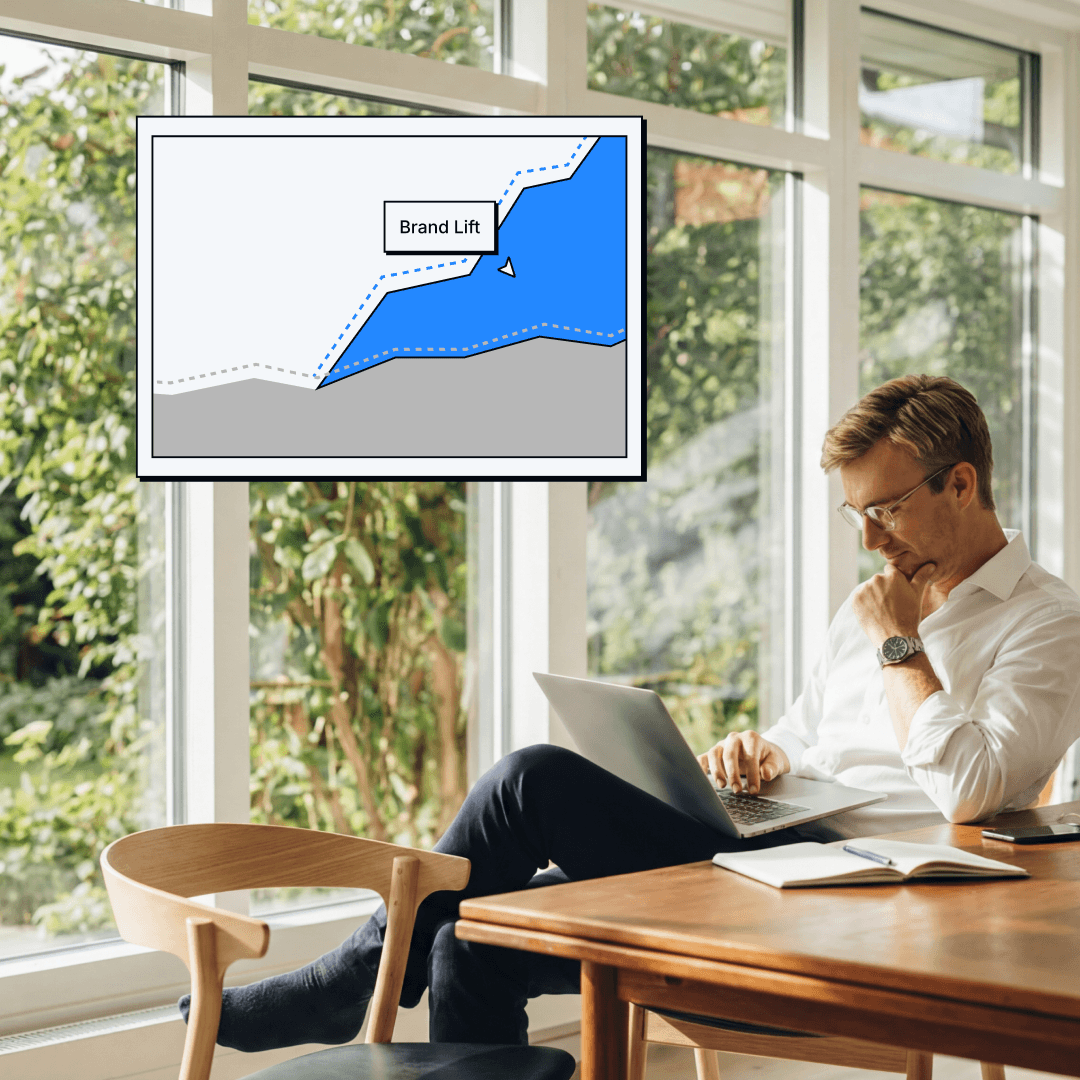
Ads that earn genuine attention drive meaningfully stronger brand recall, increased purchase consideration, and higher long-term brand equity.
Nearly half (47%) of buy-side decision-makers expected their organization to focus somewhat or significantly more on attention metrics in 2024, according to a November 2023 Interactive Advertising Bureau (IAB) survey.
Unlike click-through rate, which captures lower-funnel behavior, attention data explains why certain media placements and formats perform better over time. It bridges awareness and attribution, revealing insights that traditional KPIs miss.
For example, video ads that generate longer time in view and higher completion rate consistently outperform low-attention placements in brand lift studies. Similarly, CTV environments, where ads are full-screen, sound-on, and less cluttered, tend to deliver stronger attention benchmarks than many social media or open-web environments. Attention metrics make this visible, turning channel selection into a precision decision rather than a gut call, and connecting media planning directly to pipeline outcomes.
The Role of Attention in Creative Optimization
Creative quality plays a decisive role in capturing attention. Even the best media placement cannot compensate for an ad that fails to engage users within the first moments.
Attention measurement allows advertisers to optimize creative using real signals rather than assumptions. By analyzing attention data across formats and placements, teams can identify patterns related to message clarity, pacing, visual contrast, motion, and audio cues in video ads. These insights reveal which creative elements consistently hold user attention and which ones are ignored.
Many platforms now apply machine learning models to eye-tracking data at scale, enabling creative optimization without invasive tracking. This approach helps advertisers refine messaging, adjust formats, and prioritize creative variations that perform best in real-world conditions. Over time, attention-led creative optimization compounds with each insight feeding the next round of tests, producing ads that don’t just get placed but actually move people through the buying journey.
Attention Signals and Smarter Media Placements
Attention metrics help advertisers evaluate placements based on quality rather than volume alone. Instead of optimizing solely for CPM efficiency, marketers can assess media placements based on contextual alignment, brand safety, screen position, clutter levels, and format suitability across display, video, and CTV.
This is where performance marketing instincts often backfire. Algorithms optimized for clicks and short-term conversions gravitate toward high-volume, low-cost inventory that frequently delivers low attention. Integrating attention data into media planning corrects this by keeping the focus on quality: channels and placements where people are actually present. The evidence is consistent: fewer, higher-quality placements regularly outperform high-volume, low-attention buys on long-term brand metrics.
Attention Metrics in a Privacy-First Ecosystem
As the industry moves away from third-party cookies, attention metrics offer a privacy-forward alternative for understanding user behavior. Rather than relying on individual identifiers, attention measurement focuses on aggregated and contextual signals that reflect how people interact with digital media.
Modeled eye-tracking, panel-based research, and contextual analysis provide real-world insight without compromising user privacy. This makes attention data especially valuable as regulation, platform changes, and consumer expectations continue to reshape the digital advertising ecosystem. By prioritizing attention measurement, advertisers can maintain performance, protect brand safety, and improve media quality while reducing dependence on obsolete tracking methods.
From Attention Data to Actionable Strategy
Attention metrics are most powerful when built into every layer of your advertising strategy, from channel selection to creative decisions to budget allocation. enable smarter, more confident decision-making.
Leading advertisers use attention data to inform media planning and budget allocation, compare formats and channels such as social media, open web, and CTV, refine creative strategy based on real user attention, and establish meaningful benchmarks across campaigns. When attention measurement is integrated with attribution models, marketers gain a clearer understanding of how upper-funnel exposure drives lower-funnel performance. That's the foundation for growing with certainty rather than guessing.
Why Attention Matters for Precision Brand Advertising
Attention data helps explain why certain media placements and formats perform better over time. It reveals which environments earn real user attention, which creative choices sustain it, and which combinations quietly underperform despite strong delivery metrics.
This is where precision brand advertising becomes tangible. Agility applies attention-led insights by actively testing creatives, formats, and ad placements across high-quality digital media environments. Through geofencing, contextual intelligence, and granular media planning, Agility ensures ads appear where audiences are most likely to pay attention, not just where impressions are cheapest or most abundant.
By continuously evaluating attention signals across placements, formats, and locations, Agility helps brands understand how real-world user behavior shapes ad effectiveness. These insights inform smarter optimization decisions, allowing advertisers to refine creative, prioritize higher-attention media placements, and build strategies that perform consistently over time.
Brands that keep optimizing around exposure alone are flying blind. Attention data changes that by turning media decisions from gut-level guesses into evidence-based precision.
Stop counting impressions. Start measuring what actually matters. See how Agility’s precision brand advertising uses attention intelligence to create new buyers and grow with certainty.
Share in...